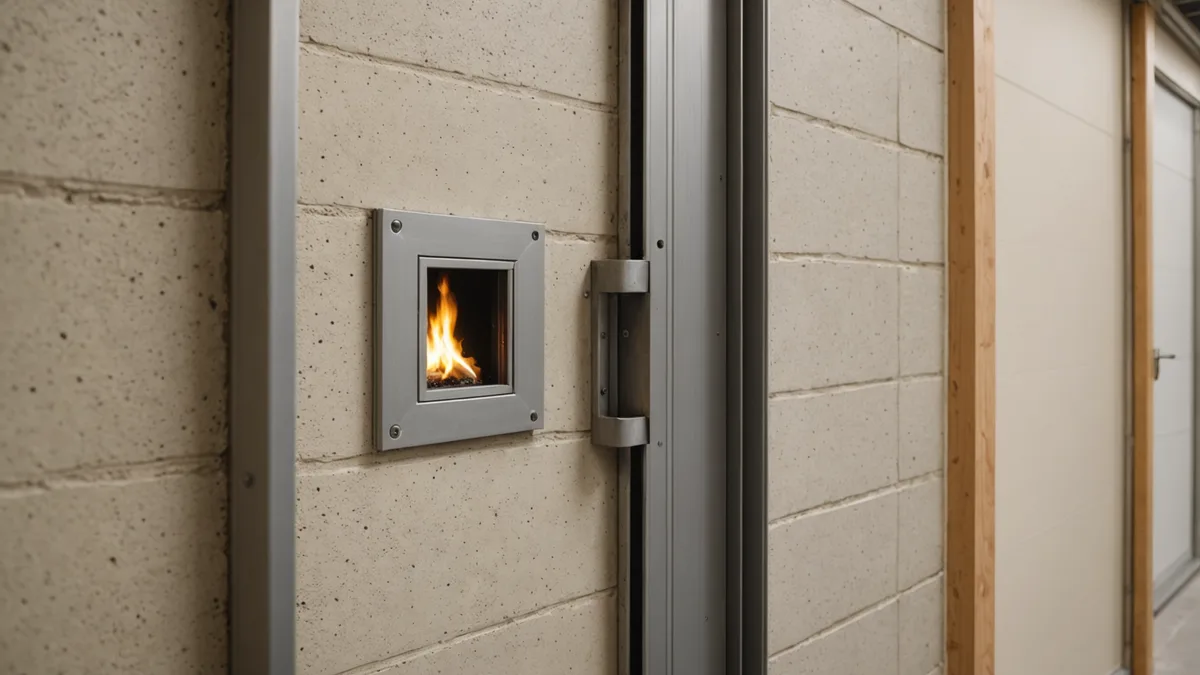
A collision inspector and a permit reviewer can examine the same machine while doing entirely different jobs. MEP coordination looks for physical conflicts in the model; code compliance asks whether the design meets regulatory requirements. A model can pass the first test and still fail plan review.
That distinction matters on Denver commercial projects because correction letters do not sort findings into coordination and compliance categories. Both appear as mixed line items. A duct may clear every beam and pipe, yet still need a listed fire damper where it crosses a rated wall. A shaft may have plenty of room around it, yet lack the enclosure the code requires. Treating both reviews as one task leaves a gap between a clean model and an approvable submission.
MEP Coordination: Clashes
MEP coordination is a spatial review of the building information model. The team checks whether discipline layouts can occupy the same building without running into one another. Typical findings include a duct colliding with a structural beam, a pipe crossing a conduit in a tight ceiling plenum, or two trades routing to the same elevation in a crowded mechanical room.
The inputs are geometry, clearances, elevations, and the relationship between discipline models. A federated Revit model and clash detection tools are useful here because they find spatial intersections. This work happens through design development and into CDs as the models mature. It is a coordination task, not a regulatory determination.
Code Compliance Checks
Code compliance asks whether an arrangement satisfies the rules that apply to it. For MEP work, that can mean checking whether a duct through a fire-rated wall has a properly listed damper under IBC 717, whether a pipe chase has the shaft enclosure required by IBC 713, or whether a mechanical room arrangement meets applicable International Mechanical Code provisions.
Those checks depend on context that geometry alone does not supply. The reviewer needs to connect a duct routing path to the fire-resistance rating of the wall it penetrates, or connect a shaft passing through floors to the enclosure requirements. NFPA 90A can also be relevant when mechanical shaft conditions fail compliance. These are regulatory relationships, not clashes.
Where the Two Reviews Meet
The same condition can create both a coordination issue and a code issue. Consider a duct penetrating a fire-rated wall without enough space for the damper assembly. The missing physical clearance is a coordination problem. The absence of the listed fire damper required by IBC 717 is a code problem.
Solving one side does not automatically solve the other. The team may move the duct to create room for the assembly, then still need to specify and document the compliant damper. Conversely, a damper can be called out on a drawing while the routed duct has no practical space for it. The model needs both a workable path and the required protective assembly.
Why Clash Detection Does Not Replace Code Review
Clash detection tools find spatial intersections between discipline models, such as a federated Revit model. They do not evaluate whether a configuration satisfies code. The software does not know that a fire damper is required at a particular location. That conclusion comes from applying a code rule to the duct path and the fire-resistance rating of the wall it penetrates.
A clash-free result therefore says only that the modeled elements do not occupy the same space in a way the tool can identify. It does not confirm IBC 717 damper documentation, IBC 713 shaft enclosure requirements, NFPA 90A conditions, or other regulatory provisions. A coordination pass is valuable, but it cannot stand in for a compliance review.
Denver Plan Check Example
Consider a four-story mixed-use project in the Denver metro area. The team completed full MEP coordination before permit submission and found zero critical clash conflicts. Plan check still returned three corrections: two duct penetrations through the fire barrier between residential and commercial occupancies lacked documented fire damper assemblies; a mechanical shaft through floors 2 and 3 lacked the enclosure required by IBC 713; and a transfer duct at a smoke partition between building sections did not document smoke damper compliance under IBC 717.
None of these were coordination failures. The ducts routed clearly. The shaft cleared adjacent structure. The compliance failures were regulatory: required protective assemblies were not specified on the drawings. The coordination process had not been designed to check for them, and no separate compliance review had covered MEP code requirements before submission.
Run Both in Parallel
Coordination and compliance should run alongside each other. Coordination develops as discipline models mature through design development and into CDs. Compliance review needs to follow that same schedule, rather than waiting until the end of CDs when corrections are more disruptive.
When Kestrel Labs checks an MEP model, it reviews regulatory conditions, including rated penetrations that need documented protective assemblies, shaft enclosures where required, and mechanical room separation where combustion air provisions apply. It is not a clash or coordination pass. Both passes are necessary for a commercial project, and running one does not substitute for the other.